Contact Us
  • Industries
    • Automotive
      • Passenger Cars & Light Trucks
      • Driver Assisted & Autonomous Vehicles
      • Electric & New Energy Vehicles
      • Heavy Trucks & Commercial Vehicles
      • Off-Highway Vehicles (OHV)
      • Racing & Motorsports
      • Recreational Vehicles
      • Motorcycles
      Automotive

      Automotive

      Flat-belt roadway enables precise replication of motorsports cornering maneuvers

      Read the Case Study
    • Materials
      • Metals
      • Composites
      • Plastics
      • Rubber & Elastomers
      • Adhesives
      • Concrete & Rock
      • Ceramics & Glass
      • Textiles
      • Wood
      • Paper Products
      • Universities
      Materials

      Materials

      Solutions for testing high-temperature alloys, composites, ceramics and polymers

      Read the Article
    • Aerospace
      • Fixed Wing Aircraft
      • Helicopters & Rotary Wing Aircraft
      • Space Structures
      Aerospace

      Aerospace

      Testing speeds using state-of-the-art cross-coupling compensation technology

      Read the Article
    • Biomedical
      • Orthopedic
      • Medical Devices
      • Dental
      • Hospitals & Universities
      Biomedical

      Biomedical

      1 in 1,000 children

      will need corrective scoliosis surgery

      Read the Case Study
    • Civil Engineering
      • Multi-Hazard Engineering
      • Seismic Engineering
      • Structural Engineering
      Civil Engineering

      Civil Engineering

      1.32 million pound

      force capacity enables the testing of very large specimens all the way to failure

      Read the Case Study
    • Rock Geomechanics
      • Fossil Fuels
      • Geothermal Energy
      • Mining
      • Construction
      • Carbon Sequestration
      • Research
      Rock Geomechanics

      Rock & Geomechanics

      3x stronger

      concrete materials make it possible to carry higher loads

      Read the Case Study
    • Energy
      • Wind Energy
      • Oil & Gas
      Energy

      Energy

      56 MNm

      overturning moment capacity enables testing of the largest wind turbine drivetrains

      Read the Article
    • Rail
      • Commuter Trains
      • Freight Trains
      • High-Speed Trains
      Rail

      Rail

      550 kph

      test system enables lab-based studies of high-speed rail operating environments

      Read the Article
  • Applications
    • Materials Applications
    • Test Type
      • Tension
      • Compression
      • Fatigue & Fracture
      • Flexure & Bend
      • Shear, Peel & Tear
      • Torsion
      • Non-Contacting Strain Measurement
      • High Temperature
      • Bi-Axial & Multi-Axial
      • High Rate
      • Dynamic Mechanical Analysis

      Material Applications by Material

    • Test Standard
      • ASTM Test Standards
      • ISO Test Standards
      • EN Test Standards

      Material Applications by Material

    • Materials
      • Metals
      • Composites
      • Plastics
      • Rubber & Elastomers
      • Adhesives
      • Fasteners & Welds
      • Concrete & Rock
      • Ceramics & Glass
      • Wood & Paper Products
      • Additive Manufacturing

      Material Applications by Material

    • Automotive Applications
      • Full Vehicle
      • Axle & Suspension
      • Steering System
      • Drivetrain
      • Dampers
      • Elastomeric Mounts & Bushings
      • Tires
      • Exhaust System
      • Body Mounted Components
      • Cooling System Components
      • Transportation & Packaging
      • Motorcycle
      • Farm, Construction, Off-Highway Vehicles (OHV)

      Automotive

    • Aerospace Applications
      • Complete Full-Scale Structures
      • Sub-Assemblies
      • Sub-Systems
      • Flight Control Systems
      • Airframe Components
      • Rotary-Wing Components
      • Gas Turbine Engine Components

      Aerospace

    • Biomedical Applications
      • Orthopedic
      • Biomechanic
      • Medical Device
      • Biomaterial

      Biomedical

    • Civil Engineering Applications
      • Civil Structures
      • Structural Sub-Assemblies & Components
      • Non-Structural Systems
      • Offshore & Coastal Terrain/Infrastructure
      • Construction Materials

      Civil Engineering

    • Energy Applications
      • Wind Turbine Testing
      • Oil & Gas Pipeline

      Energy

    • Rock Geomechanics Applications
      • Fossil Fuels
      • Geothermal
      • Nuclear Waste Storage

      Rock Geomechanics

    • Rail Applications
      • Rail Car Suspension Components
      • Rail Car Coupler
      • Rail Car Wheels & Rail
      • Rail Car Axles
      • Rail Car Bogies
      • Complete Rail Cars
      • Rail Car Pantographs
      • Railway Track & Road Bed
      • Catenary & Trolley Wire

      Rail

  • Products
    • Automotive Systems
      • Full Vehicle Test Systems
      • Subsystem & Component Test Systems
      • Tire Test Systems
      • Damper Test Systems
      • Elastomer Test Systems
      • Hybrid Simulation Solutions
      • Modular Components

      Automotive

    • Materials Test Systems
      • Static Materials Test Systems
      • Dynamic Materials Test Systems
      • Extensometers
      • Grips
      • Fixtures & Platens
      • Furnaces, Chambers & Fluid Baths
      • High Temp Subsystems & TMF
      • Load & Torque Cells

      Materials

    • Aerospace Systems
      • Turnkey Control & Data Acquisition
      • Turnkey Hydromechanical Power Distribution
      • Test Article Safety Solutions
      • Series 261 Structural Pressure Test Controller
      • High Force Test Systems
      • Modular Components
      • FlexDAC Data Acquisition Systems

      Aerospace

    • Biomedical Systems
      • Orthopedic Test Systems
      • Biomechanic Test Systems
      • Medical Device Test Systems
      • Biomaterial Test Systems

      Biomedical

    • Civil Engineering Systems
      • Seismic Simulators & Shake Tables
      • Multi-Axial Subassemblage Structural Test Systems
      • Hybrid Simulation Solutions
      • Wave Generators
      • Seismic Isolation Bearing Test Systems
      • High-Force Test Systems
      • Modular Components
      • STEX Pro Software

      Civil Engineering

    • Energy Systems
      • Wind Turbine Blade Fatigue Systems
      • Wind Turbine Blade Static Systems
      • Non Torque Loading System
      • Oil & Gas Pipe / Coupling Test Systems
      • High-Force Test Systems
      • Modular Components

      Energy

    • Rock & Geomechanics Systems
      • Rock Mechanics Test Systems
      • Polyaxial Rock Test System

      Rock Geomechanics

    • Rail Systems
      • Air Spring Test System
      • Railway Damper Test System
      • Rolling Contact Fatigue (RCF) System
      • 4-28 Channel Bogie Frame Test System
      • Bogie Vibration & Characterization System
      • Pantograph Wear & Performance System
      • High-Force Test Systems
      • Damper Durability Test Systems
      • Elastomer Test Systems
      • Modular Components

      Rail

    • Test System Components
      • Actuators & Servo-Valves
      • SilentFlo™ Hydraulic Power Units
      • 295 Hydraulic Service Manifolds
      • Stands & Frames
      • Load Bearing Components
      • FlexTest® Controllers
      • FlexDAC Data Acquisition
      • SWIFT® Evo Wheel Force Transducers

      Test System Components

    • Software & Monitoring
      • RPC® Connect Software
      • TestSuite™ Software
      • AeroPro™ Software
      • RPC® Software
      • STEX™ Pro Software
      • Elastomer Testing Software
      • Damper Testing Software
      • MultiPurpose TestWare® (MPT)
      • First Road Interact Software
      • Multi-Pump Control Manager
      • Echo® Intelligent Lab

      Software & Monitoring

  • Services
    • Services
      • Calibrations & Metrology
      • Consulting & Engineering Services
      • Equipment Monitoring
      • Routine Maintenance
      • Repairs & Remanufacture
      • Relocation Services

      Services & Support

    • Plans
      • Software Support Plans
      • Technical Support

      Services & Support

    • Training

      Training Courses

    • Parts

      Parts

    • Support
      • Technical Support
      • Knowledge Articles
      • Technical Manuals
      • Software Downloads

      myMTS Portal

  • Learn
  • Company
    • Our Company
      • About MTS
      • Global Presence
      • History

      Our Company

    • Careers

      Careers

    • Sustainability

      Sustainability

    • Suppliers
      • Supplier Home
      • Products & Services

      Suppliers

  • Solution Finder
  • Contact Us
  • R&D Group
  • E2M Technologies
  • myMTS Portal
  • Global Sites
  • Search
Home > Now We’re Cookin’

National Research Council of Canada: Now We’re Cookin’

MTS technology helps Canadian government lab push the boundaries of high-temperature materials testing.

CUSTOMER CHALLENGE

The development of high-temperature materials—those that can perform at extreme temperatures for extended periods—is setting the stage for the next generation of jet engines and gas turbines that will redefine expectations for fuel-efficiency. Some of the most advanced research in this field happens in the Structures and Materials Performance Laboratory, part of the National Research Council of Canada’s Institute for Aerospace Research located in Ottawa, Ontario.

Here, the Materials and Component Technologies Group, a team of 15 research scientists, specializes in designing, developing and testing new gas turbine materials, including high-temperature alloys and ceramic matrix composites. The group pursues in-house research and also collaborates with commercial engine manufacturers such as Pratt & Whitney, Rolls-Royce and General Electric, and material vendors such as ATI Allvac and Carpenter Technologies. To determine exactly how new materials will perform—and how long they will last—when exposed to increasingly high temperatures they must pursue a wide array of precision mechanical testing.

“We do anything from tensile, creep and fracture toughness testing to more specialized tests, such as fretting fatigue, thermomechanical fatigue, fatigue crack growth and creep crack growth rate,” said Dr. Kearsey, manager of the group’s High-Temperature Fatigue and Fracture Mechanics Facility. “We are developing the materials, testing them and then developing standard test methods for characterizing these materials, which includes figuring out the geometry of the specimen as well as duplicating the service environment of the engine in the lab.”

Right now, Dr. Kearsey’s biggest challenge is simple: heat. In previous decades, temperatures for testing stainless steel, titanium and aluminum alloys were relatively moderate. Testing today’s most advanced materials requires temperatures as much as 25 percent hotter.

“The temperatures are so high that testing the materials becomes a more complex problem,” he said. “How do you measure materials at 1000°C when the standard practice relies on equipment rated for 800°C? How do you add proper instrumentation to measure crack growth rate? It’s not impossible, but it is very complicated. We have to make absolutely sure that the temperatures and loads are 100 percent traceable, because our results are being used to make critical engine components.”  

MTS SOLUTION

The Materials and Component Technologies Group deploys 18 different MTS solutions for high-temperature testing, a lineup that includes everything from legacy MTS 810 load frames to state-of-the-art MTS Landmark® Servohydraulic Test Systems.

“The reason we only use MTS load frames is stability,” Dr. Kearsey said. “When we have four or five frames running side by side, the lab is shaking. The MTS frames are so stable; there is no twisting or torsion that might misalign the specimen.”

Rounding out the facility’s test equipment are two MTS hydraulic power units, FlexTest® digital controls and Multipurpose TestWare® software. The lab also employs a full complement of MTS test accessories, including grips and fixtures, extensometers and strain gages, furnaces and induction heating units—all of which must be easy to combine and integrate into the often complex configurations required for specific high temperature tests.

“The hardware needs to work properly at different test temperatures and conditions,” Dr. Kearsey said. “We like that we can take an MTS furnace and stick it on any load frame. Interchangeability is important, especially for repeatability. When we have to do 100 tests on a similar geometry, we don’t want to spend time redoing the calibration for every single one.”

CUSTOMER BENEFITS

For Dr. Kearsey, nothing is more important than the reliability of the test hardware and software. Reliability is essential for the accuracy of the results, the productivity of the lab and the satisfaction of external clients.

“We buy MTS equipment because it almost never fails,” he said. “It doesn’t have to be replaced. It’s reliable and it’s traceable. As a research lab, traceability is a key requirement. If we do an alignment on a system, we have to be sure that is exactly what happens on the next test. It doesn’t matter if we’re testing an advanced single-crystal alloy or evaluating 50-year-old alloys for life prediction modeling. With MTS test systems, we can generate the data required to make confident decisions.”

The reliability of extensometers is particularly critical in high-temperature materials testing, especially at frequencies up to 10 Hz or with stiffer materials where measured reflections are smaller. Dr. Kearsey also cites the reliability of the software as a significant factor.

“When you’re doing thermomechanical fatigue testing, for example, the tests can last three months,” he said. “It’s very expensive for our clients. You never want to tell them the software crashed during the test and their results are invalid. MTS software is critical in this regard because it doesn’t give us that headache. It’s very reliable and many of the modules are preprogrammed for low-cycle fatigue, thermomechanical fatigue and other types of tests.”

Even now, as Dr. Kearsey works to overcome the challenges associated with testing at 1000°C, he expects the upper bound to rise. In fact, he is working with MTS to design test systems that can perform at these much hotter temperatures.

“As the newer alloys are replaced with ceramic matrix composites, we will need to run tests up to 1300°C or 1400°C,” he said. “We are already discussing how to make this happen with MTS. What size furnace will we need? What will the hot zone be? What extensometry will we need? MTS always seems to come to us at the right time. That kind of support is why we keep going back to MTS.”
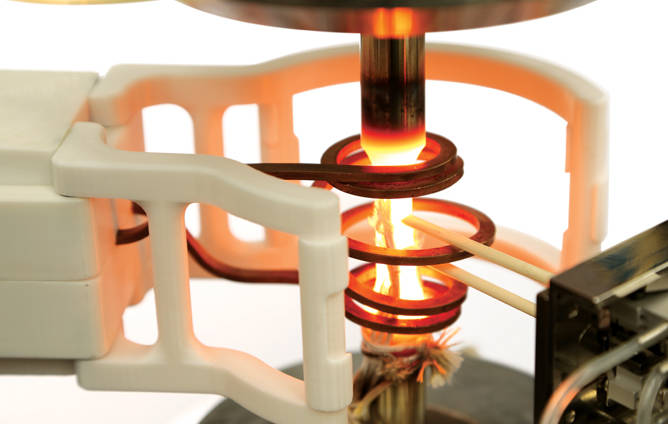
 

Learn more about MTS solutions for high-temperature applications

High-Temp Solutions
Stay Connected

Lorem Ipsum Dolor

Lorem Ipsum Dolor

  • INDUSTRIES
  • SALES & SUPPORT
  • SUPPLIERS
  • ABOUT
  • APPLICATIONS
  • LEARN
  • CONTACT US
  • BUSINESS
We use necessary cookies to make our site work. We'd also like to set up optional analytics cookies to help us improve it. We won't set optional cookies unless you enable them.
Decline Accept
We use necessary cookies to make our site work. We'd also like to set up optional analytics cookies to help us improve it. We won't set optional cookies unless you enable them.
Decline Accept